
Suwannee County Jail Mugshots Overview
The Suwannee County Sheriff's Office runs the jail roster, and that roster displays booking photos on public inmate records. The captured Suwannee sample showed a thumbnail photo with an Enlarge Photo link beside the record. The roster page is titled JAIL View, and its default screen reads BOOKED Last 24 Hours, which works as a recent-bookings display when current data is present.
That default view is the closest thing to a daily booking report for the county. There is no separate official mugshot gallery and no daily booking PDF beyond the roster itself. The sheriff's captured pages also do not state how long a photo stays visible after release, so treat the roster as the live source and do not assume a fixed retention window.
The booking photo is one piece of a larger record, not a stand-alone gallery item. On the Suwannee roster, a photo sits beside the charges, bond, and holds for that booking. Reading it that way keeps the photo in context, because a booking photo reflects an arrest, not a conviction. The charges shown can change once a prosecutor reviews the case, a point covered on the court records after a jail arrest page.
Where to Find Suwannee County Booking Photos
Start at the official roster. A name search returns the record, and the record carries the photo. If the photo is not visible, the fallback is a public-records request to the sheriff. Avoid third-party mugshot sites, which the clerk says it cannot control and which often charge fees.
- Open the SMARTCOP JAIL View roster or read the default recent-bookings list.
- Search by last name, adding a first name to narrow common matches.
- Open the record and use the Enlarge Photo link to view the booking photo and details.
- If a photo is not online, file a public-records request with the sheriff for the booking photo.
For a record not on the roster, the sheriff contact and public-records page is the right channel and names the records custodian.
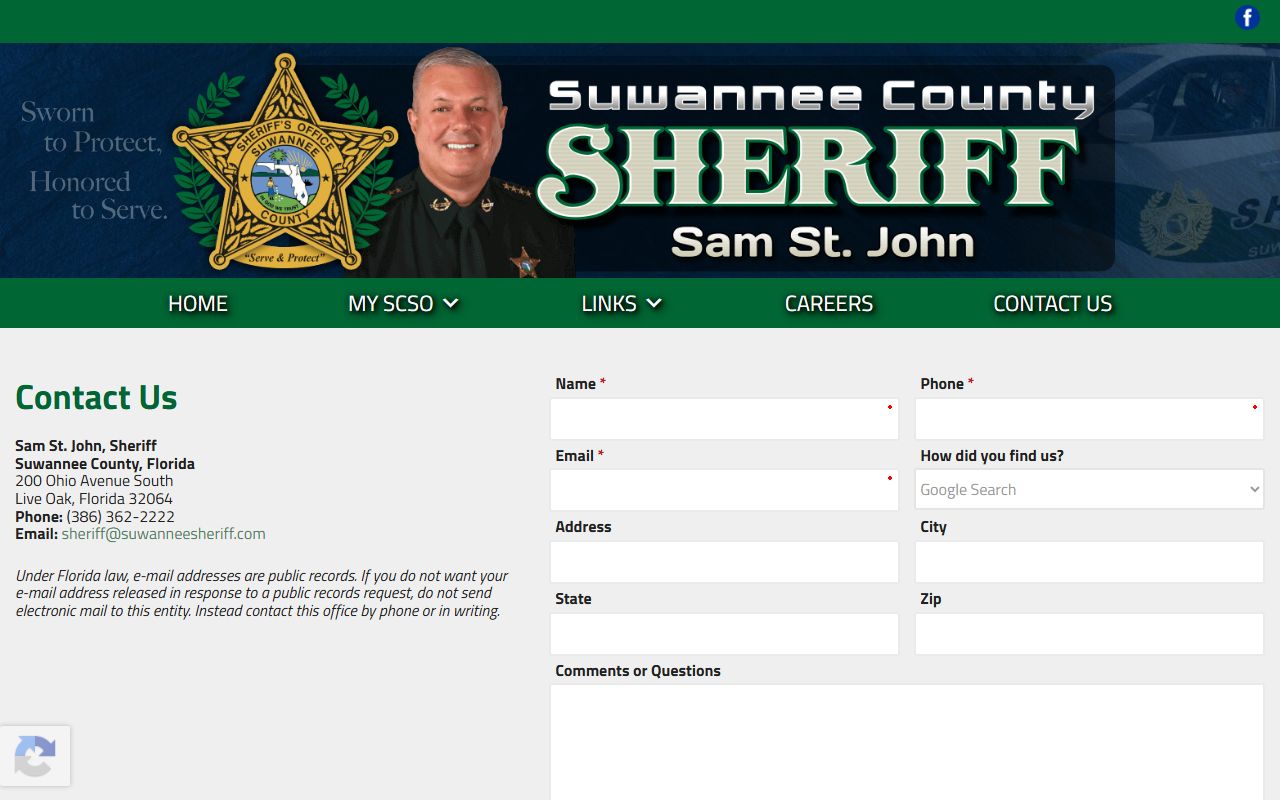
The sheriff contact page lists the public-records custodian, Traci McCormick, at (386) 364-3417. That line is the path for a booking photo that the public roster does not show.
What a Suwannee County Booking Photo Shows
The photo never appears alone. On a Suwannee record it sits with a set of booking fields. The captured sample showed the photo plus the items below. It did not show height, weight, date of birth, eye color, or hair color, so the roster photo is paired with booking facts rather than a full physical description.
| Field | What It Shows |
|---|---|
| Booking Photo | A booking-image thumbnail with an Enlarge Photo link; no multiple angles in the public view. |
| Name | Last and first name in the record header. |
| Race / Sex | A race code and sex marker in parentheses. |
| Booking Date | Date and time of intake. |
| Charges | Statute, court case number with agency, charge, degree, level, and bond. |
Are Suwannee County Jail Mugshots Public Record?
In Florida, a booking photo is generally treated as part of the public booking record, subject to exemptions. The state's public-records framework is Chapter 119, which defines public records broadly and governs inspection, copying, and redaction. Basic arrest and booking information is handled differently from active criminal investigative material, which can be exempt while a case is live. Juvenile records, sealed or expunged records, and victim protections can also limit access in a given case.
Key Statutes:
Florida Statutes Chapter 119 - the public records law that makes booking records open to inspection, with named exemptions and redaction rules.
Florida Statutes § 901.43 - bars businesses that publish booking photos from charging a fee to remove them and sets a no-fee removal-request process.
How Long a Mugshot Stays on the Roster
No official rule sets the window. The sheriff's captured pages do not say how long a booking photo stays visible after release, and they do not describe historical photo retention. The practical takeaway is simple: a photo on the roster reflects a current or recent booking, and a name can drop off without a stated countdown.
What is and isn't public: The roster shows a booking photo, name, race and sex marker, booking date, charges, bond, and holds. It does not show date of birth, physical description, housing assignment, or court dates. A photo or record not visible online may still be available through a public-records request to the sheriff, subject to Florida exemptions.
How to Request a Suwannee County Booking Photo
When a booking photo is not on the roster, a public-records request is the route. The sheriff's records custodian handles these by phone at (386) 364-3417 or by written request to the sheriff's office at 200 Ohio Avenue South, Live Oak, FL 32064. The county also runs an official online request portal for public records. Florida law lets a custodian redact exempt portions and provide the rest, so a request may return a record with some information withheld.
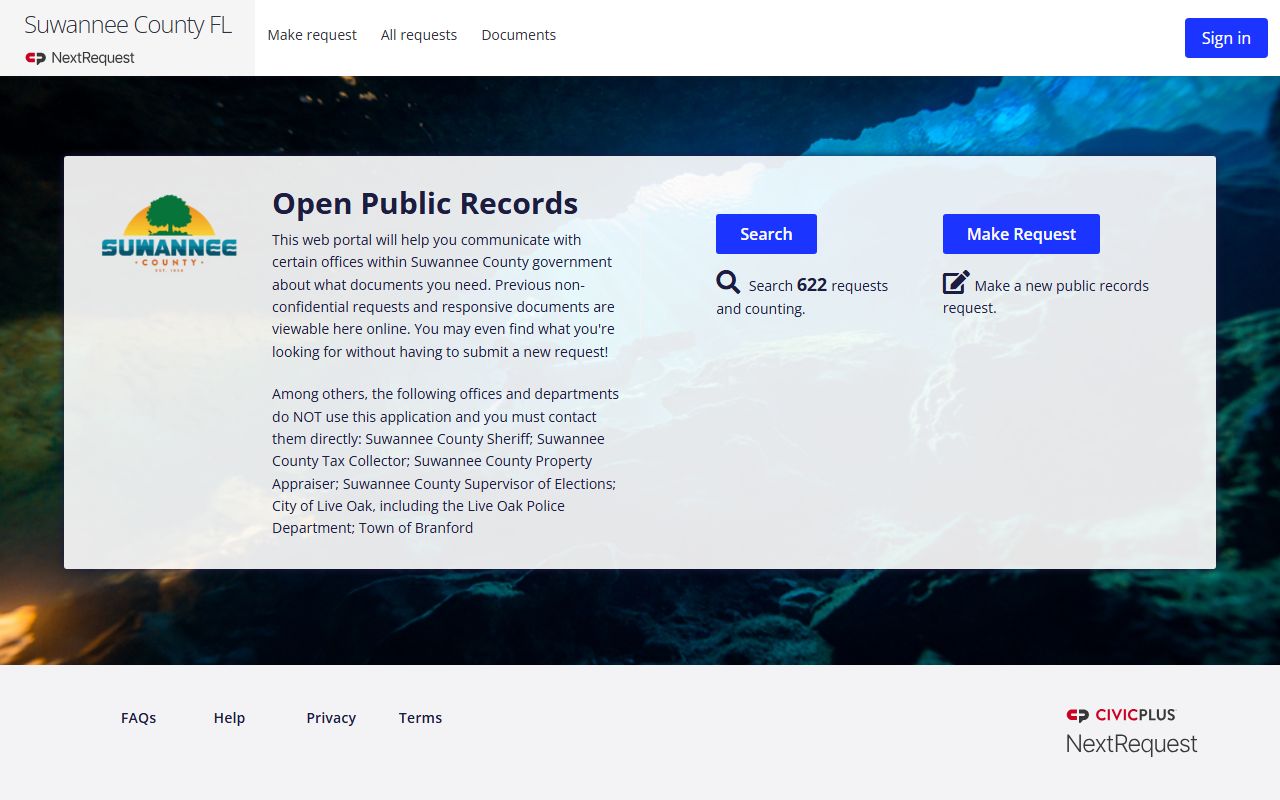
The official public-records request portal is the written channel for records not online. Because Florida treats email addresses as public records, a sensitive requester may prefer phone or mailed requests over email.
The sheriff's captured pages did not post a specific fee schedule or turnaround time for a booking-photo request, so confirm any copy cost and timing when you make the request. Under Florida's public-records law, a custodian who withholds part of a record must point to the statutory exemption that applies, which means you can ask which exemption is being used if a photo or record is denied or redacted.
Mugshot Removal and Sealed Records
Removing an official photo is a records process, not a payment. If a case has been sealed or expunged, the proper route is the court order and the record custodian, using the documentation from the sealing or expunction. The county does not advertise a policy of deleting photos after a dismissal on its own, so the researched path is to clear the underlying record. For commercial sites that publish booking photos, Florida Statutes section 901.43 provides a no-fee removal-request procedure by registered mail, and the publisher must remove a covered photo within 10 calendar days. The clerk notes that it cannot control outside websites.
The full sealing and expunction steps are covered on the court records after a jail arrest page, including the FDLE Certificate of Eligibility that must come first.
The Official Roster vs. Outside Mugshot Sites
Outside websites are not the place to start, and they are not the place to fix a record. The Suwannee clerk explains that arrest records and booking photos on outside websites are not clerk records, that those sites pull from custodians around the country, and that the clerk cannot control them. The official sheriff roster, by contrast, is the source the county actually maintains.
Florida law draws a line around the commercial sites specifically. Section 901.43 bars a business that publishes booking photos from charging a fee to take one down, and it sets a removal-request process by registered mail with proof of identity and the photo's identifying details. A covered publisher must remove the photo within 10 calendar days at no charge. That statute targets fee-for-removal operators. It does not mean the official sheriff roster is a pay-to-remove site or that official records vanish on their own.
Stay with official sources: Use the sheriff's roster and records unit for a Suwannee booking photo, and use the sealing or expunction route to clear an underlying record. Avoid paying any site that promises removal.
Federal and State Booking Photos
Federal custody works differently from a county jail. The federal Bureau of Prisons and the U.S. Marshals do not run county-style mugshot galleries, and federal lookups generally do not publish booking photos the way a county roster does. The Florida Department of Corrections does include inmate photographs in its statewide locator, but those are state-prison photos, not county booking photos.
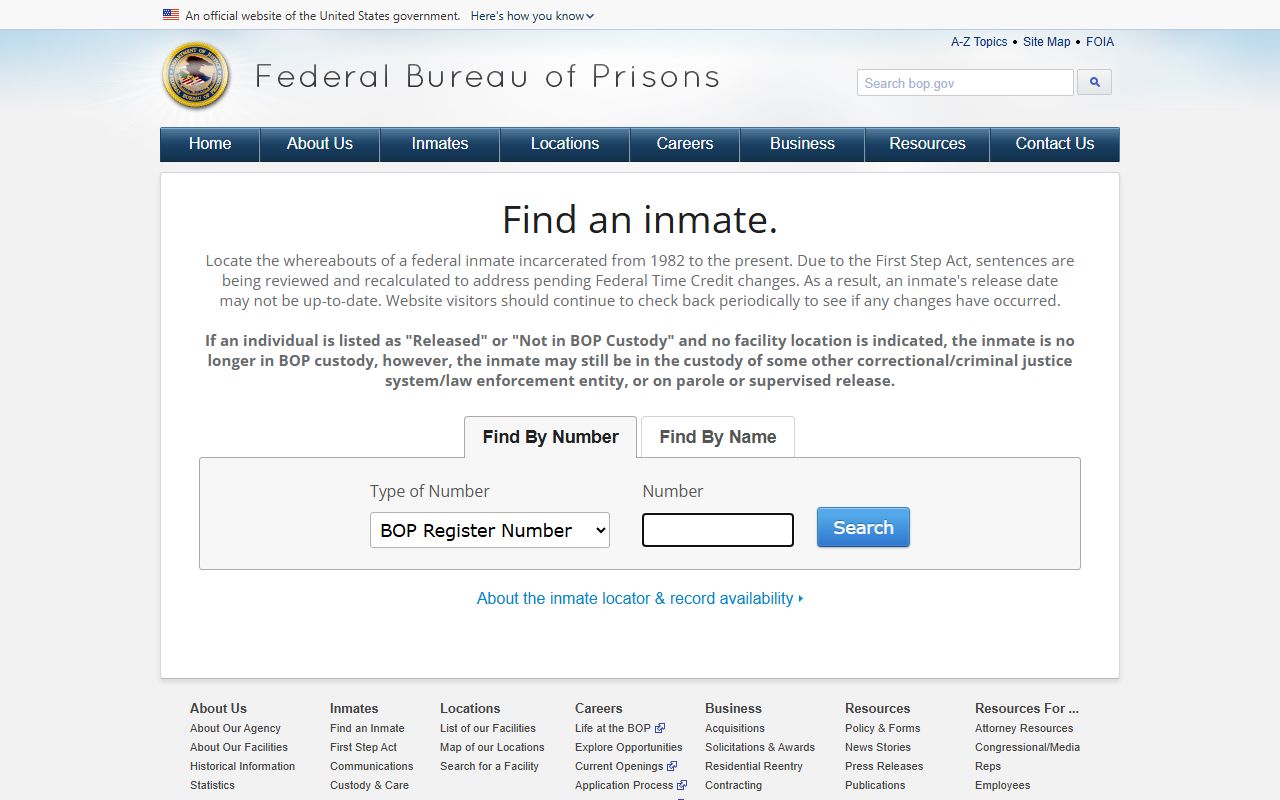
The federal BOP inmate locator returns name, register number, age, and location rather than a booking photo, which is the main difference from the county roster. For a sentenced state prisoner, the FDC locator carries the photo instead. The U.S. Marshals Service, which handles federal pretrial custody, runs no public inmate locator at all, and immigration custody uses the ICE detainee locator, which is a finder rather than a photo gallery.
The takeaway is to match the system to the custody. A county booking photo lives on the sheriff's roster. A state prison photo lives in the FDC locator. Federal custody generally does not publish a county-style mugshot. Starting in the right system saves time and keeps you on official sources.